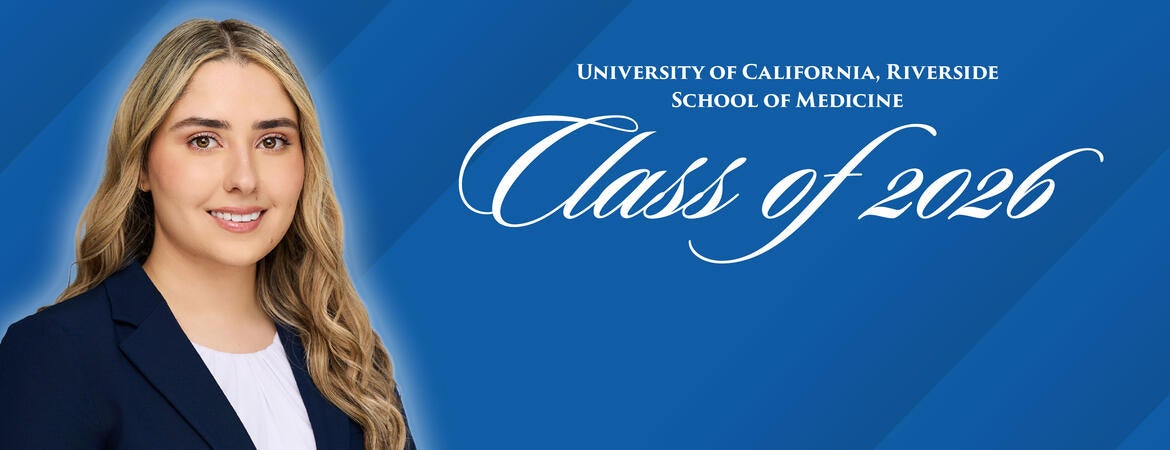
When a child received a diagnosis for a cardiac issue on one of her pediatrics rotations, Helen Setaghiyan knew exactly what to do. “I ended up talking to the mom about how I received an unexpected diagnosis and the challenges I faced, and how my family navigated that situation,” recalled Setaghiyan, UC Riverside School of Medicine Class of 2026. “The mom was so extremely grateful, and it was about giving families hope for all the days ahead and reassuring them that you're going to get through this challenge.”
Diagnosed with a rare heart condition early in college, Setaghiyan now shares her story to connect with her patients. Yet when she first received her cardiomyopathy diagnosis, she was unsure if she could still pursue her lifelong dream of becoming a doctor.
Support on the path to, and throughout, medical school
Encouragement from Setaghiyan’s family and medical team put her back on the path to medical school. “My family and my healthcare team and my mentors were in support of me pursuing medicine in a ‘let's try and see what happens’ situation,” she said.
She chose UCR in part because it kept her close to her support network of family members and medical providers in Los Angeles. “Knowing that UCR’s mission is so focused on supporting students who want to pursue primary care was definitely a huge driving factor,” Setaghiyan added. “I knew that my interests would be nurtured throughout med school.”
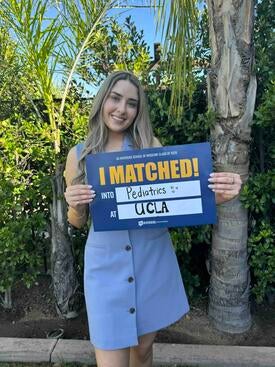
Setaghiyan developed an early interest in pediatrics while growing up in a large Armenian immigrant family, where she helped care for younger cousins. That passion has since evolved into a commitment to supporting children and families navigating complex medical and developmental needs.
Now, Setaghiyan will graduate in June with support from a Dean’s Mission Scholarship and begin her residency in pediatrics this summer at UCLA Medical Center.
“I could never pay back my parents for the amount of support and encouragement they've given me,” said Setaghiyan, crediting her family for cheering her on at every step. Yet she also credits her medical team for encouraging her to pursue her dreams–encouragement that she now hopes to provide to her own patients. “I want to be the person who empowers my patients when they're adolescents to say, ‘Hey, you should go to college, you should pursue that degree, you should go try to get this job that you think might not be possible,’” Setaghiyan said. “I wouldn't have gone down this path if my own healthcare providers were not in support of it.”
“My lived experience brings this whole experience of what it means to be a patient, how nervous you feel when you go to see your doctor, how vulnerable it feels when you're in the hospital, and all of those things add to the quality of the physician I hope to be,” she added. She also recognizes the overwhelming task that families face when navigating complex systems of care. “Families need help to fit the puzzle pieces together and understand how they should be advocating for themselves,” she said. “As the primary care doctor, you are the person who bridges all of those things together and makes it make sense for your patients.”
Supporting patients as a medical student
Setaghiyan hasn’t waited to graduate to actively start supporting local patients and their families. Based on her own experience with chronic illness, she founded a program called NDD Circle to help improve Inland Empire children's access to health services.
With grants from the UCR School of Medicine Center for Healthy Communities (CHC) and the Dean’s Research Innovation Fund, Setaghiyan hosted Zoom sessions through the program to help parents learn techniques and access resources to care for their children with neurodevelopmental disorders. “Getting to interact with these parents and seeing the passion they have for learning more to do better for their children… it was just really heartwarming,” recalled Setaghiyan. “NDD Circle brought me so much joy and so much knowledge from parents’ firsthand experience of what they're living through versus what I can read about online.”
The idea came from Setaghiyan’s involvement with a similar program at Children’s Hospital Los Angeles before she started medical school. “The most important thing when you have any medical condition, whether it's a heart condition, autism, or cancer, is that knowledge is power,” she said. “Being able to understand your condition, your options, and the resources and services you can access is super important.”
Working with Adwoa Osei, MD, associate dean of Medical Education Quality & Compliance at the UCR SOM and a pediatrician at UCR Health, Setaghiyan first conducted a community needs assessment to determine areas in need of support. She then led a student-run, six-week intervention to teach families about tools to navigate healthcare services. The Zoom sessions also gave parents a community to share their challenges and learn from one another. “In pediatrics the stigma is that the parents are difficult to work with, but NDD Circle was that reminder for me that parents are awesome and are going to go to the millionth mile to protect their children's well being,” Setaghiyan said.
Osei called the program innovative, creative, and community centered. “It was right up the alley for the mission of the School of Medicine,” she said. “I was struck by how intentional and purposeful Helen was in making sure that this actually met the needs of the families.”
Advocating for other students, patients, and families
In her limited free time in medical school, Setaghiyan also joined the executive board of a nonprofit organization called Medical Students with Disability and Chronic Illness (MSDCI), serving as director of internal affairs and starting a branch at UCR. “It’s truly incredible to collaborate with med students from all around the country who have disabilities or chronic illnesses and are also navigating accommodations, clerkships, residency applications, disclosure, and their identity,” she said. Through this work, she has helped build community, increase visibility, and create support systems for trainees navigating similar challenges–efforts she plans to continue throughout her career.
Setaghiyan intends to continue her own community-based research as well, including building on her work with NDD Circle. The initiative found that challenges families faced when advocating for their children were not individual shortcomings or community issues, but broader institutional barriers such as school district policies. “It’s bringing more attention to the fact that these families have these individual struggles that they're trying to overcome, but they're not barriers in place because of their unique personal circumstances; they're systemic barriers where as a pediatrician, you can go and advocate,” she said. “I'm hopeful that after a few iterations of NDD Circle, we can collect information to the point where we can go to local policy leaders and local school districts and bring to their attention the challenges that families are facing.”
Osei confirmed that the program will continue to serve Inland Empire families after Setaghiyan moves on to residency. “She's leaving a legacy,” Osei said.
Ultimately, Setaghiyan aims to use her experiences to help children and families. “I’ve faced an incredibly challenging diagnosis, and adapting to a new normal over the past 10 years hasn’t been easy,” she said. “But at the end of the day, I am so lucky that I can still pursue my dreams and live a very fulfilling life.”
“For me it’s really important to support parents in the process to help their children reach their fullest potential,” Setaghiyan continued. “The moral of the story is about advocacy: self-advocacy, parents advocating, and you as a provider advocating for the kids.”