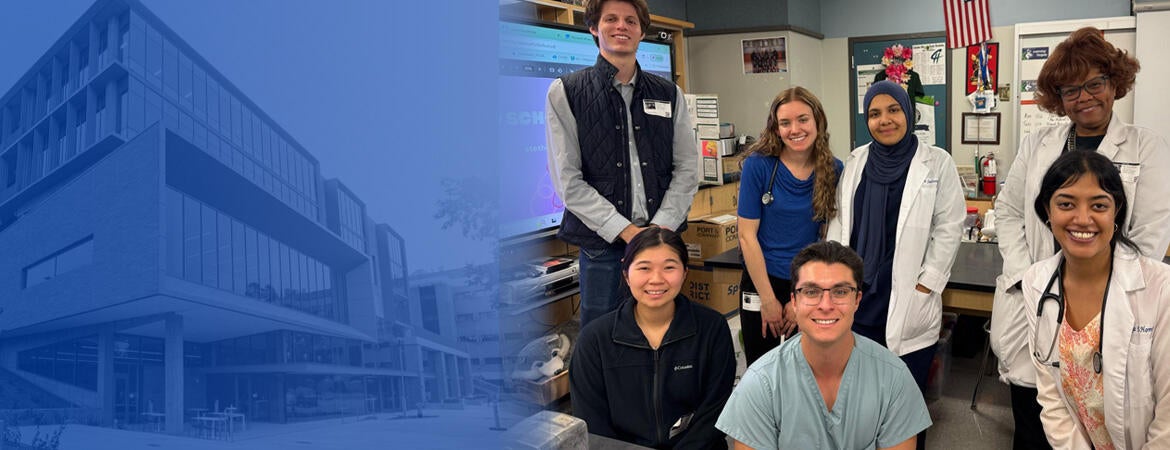
After a recent presentation on lung cancer at a high school, a teacher approached UC Riverside School of Medicine student Vjola Haka in tears. "She told me, 'Thank you so much for talking about this topic. I actually just had breast cancer, and seeing how passionate you guys are and what you're going through to actually help people in the future really gives me a good feeling," recalled Haka, who gave the presentation as a member of the new UCR student group Doctors’ Corner. "It really made me understand that we are impacting people in so many different aspects, not just career-wise, but personally and health-wise."
Founded in 2013, Doctor’s Corner is a community organization originally based at the Riverside Women's Club, the oldest community service organization in Riverside. When Desiree Reedus, MD, MS, FACC, founded Doctor's Corner, the UCR School of Medicine was newly established, the region's first new medical school in 40 years. She saw an early opportunity to connect local medical students with the Inland Empire community, inspiring them to stay and practice in a region with a shortage of primary care and other physician specialties.
"I thought, well, what can I do to not only highlight the good things that the school is doing but also to connect the students?" Reedus explained. "It's not just about the academics. You have to learn the process of being a doctor, and that involves being able to communicate yourself, use your differential diagnosis, and present it in a professional fashion."
At its core, Doctor's Corner is driven by a simple belief that students who form connections to their communities early are more likely to stay and practice there. Reedus knew from her own experience that these connections matter. "I have found that students who want to stay after their medical training, due to their perspective in terms of fellowships and the ultimate decision to practice in the area, are those who have a connection to the area," she said. "Those seeds start early as to where you want to throw your hat early in your career."
From women's club to student interest group
As Doctor’s Corner has grown over the past decade and more medical students have joined, the group’s needs have changed. What began as a small program with two medical students now reaches hundreds of middle and high schoolers each year, while transforming the medical students who lead it.
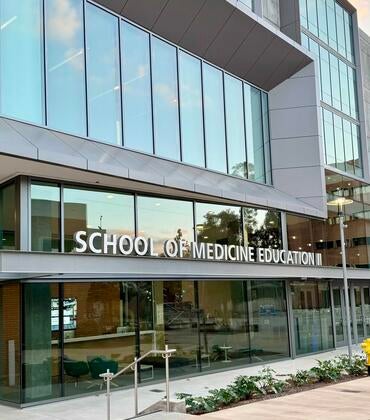
In 2026, Doctor’s Corner formed a student interest group at the UCR School of Medicine. The new format allows it to attract more medical student participants and reach more people while maintaining strong ties to the community and the branch at the Riverside Women’s Club.
Both groups aim to teach people about health and equip future doctors with the tools they need to succeed, but they do so for different audiences. The dual structure also offers flexibility: if community venues aren't available, the community group’s events can be held at the school, and if students want to expand, they can collaborate with additional organizations across the Inland Empire through the Women’s Club.
"The affiliation is really just that sometimes we go to those venues and present there," explained Shloka Homa, a second-year medical student at the UCR SOM. "So if one ring goes to high schools or we go to veterans appreciation events, that's a part of the community organization rather than the student interest group."
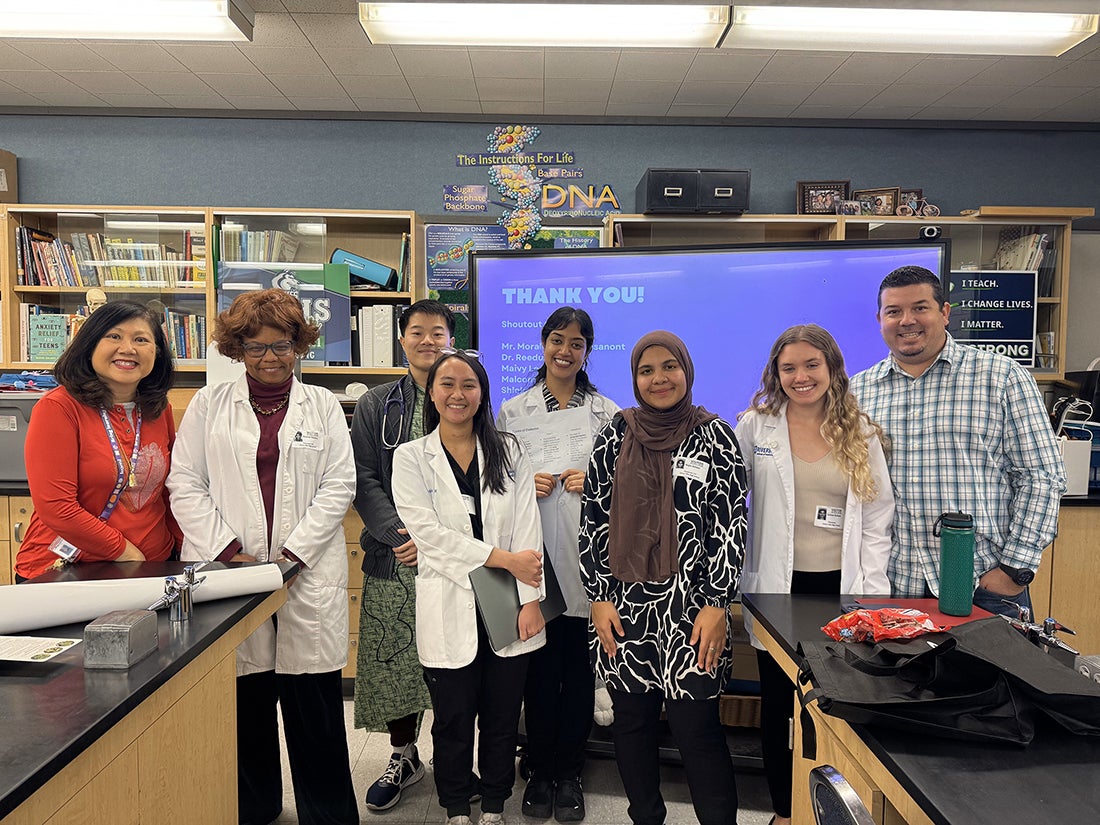
The Doctor’s Corner mission at the UCR SOM
Medical students in the Doctor's Corner student group take part in a range of activities, including teaching high school students to use ultrasound and stethoscopes, giving talks on heart health and other topics to older adults, and running case-based sessions at middle schools on weekends. The group works to make sure that every experience is right for its audience.
“The sessions are hands-on and interactive for the younger students, varying from middle schoolers to high schoolers. They can hear their own heart sounds, learn basic clinical skills, and hear directly from Dr. Reedus about her journey as a cardiologist,” explained Ashlen Bullock, a second-year UCR medical student and Doctor’s Corner member. The group also offers guidance on pursuing a medical career for first-generation students who may not know how to get into medical school.
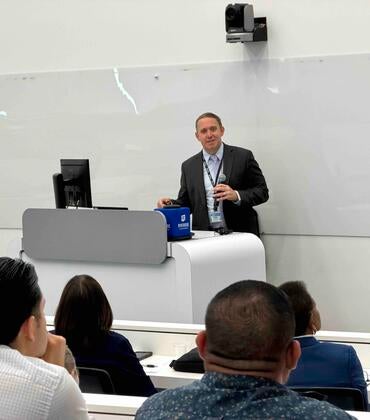
For other community groups, Doctor’s Corner presentations cover important health issues affecting older people, such as diabetes and heart disease. Students use interactive elements to help people relate the information to their own lives. At a vaccination presentation at the Riverside Women's Club, for example, the student group had attendees act out going to a baby shower, when one mom mentions that she doesn't want to vaccinate her baby. "It was comedic and fun, but it also provided an opportunity to engage in those scenarios in real life," explained second-year SOM student Najia Saleem, who participates in Doctor’s Corner. What could have been boring health information became interesting and personal.
Beyond presentations, the student group also directly tackles health misinformation. At a recent community event, attendees shared misconceptions about health. Some were based on personal experiences or internalized beliefs. Rather than shutting down these conversations, the medical students engaged respectfully. They shared facts and listened to others' stories in the community. "There were a lot of health misconceptions," recalled Haka. "They had ideas which maybe weren't true, or they had experiences with physicians that maybe led them to believe in certain ideas. And when they talked about it in the open, other people were able to answer, 'Actually, e-cigarettes are just as damaging as regular cigarettes.'"
An impact in both directions
The impact of Doctor's Corner extends far beyond one-off presentations. For middle and high school students, particularly many first-generation students aspiring to medicine, the program provides both inspiration and practical guidance.
“With us going to the schools and presenting to them, they have the opportunity to ask questions on how to go about the journey to medicine,” Bullock noted. “They have the chance to reach out to us as medical students and to Dr. Reedus."
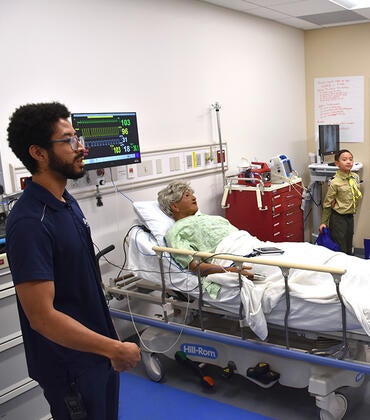
For medical students leading the organization, the benefits are also profound. They gain confidence and leadership skills as they learn to communicate complex medical concepts to diverse audiences. Most importantly, they become rooted in the community by practicing ultrasound skills, explaining findings, and engaging in case-based learning, thereby building on their classroom instruction.
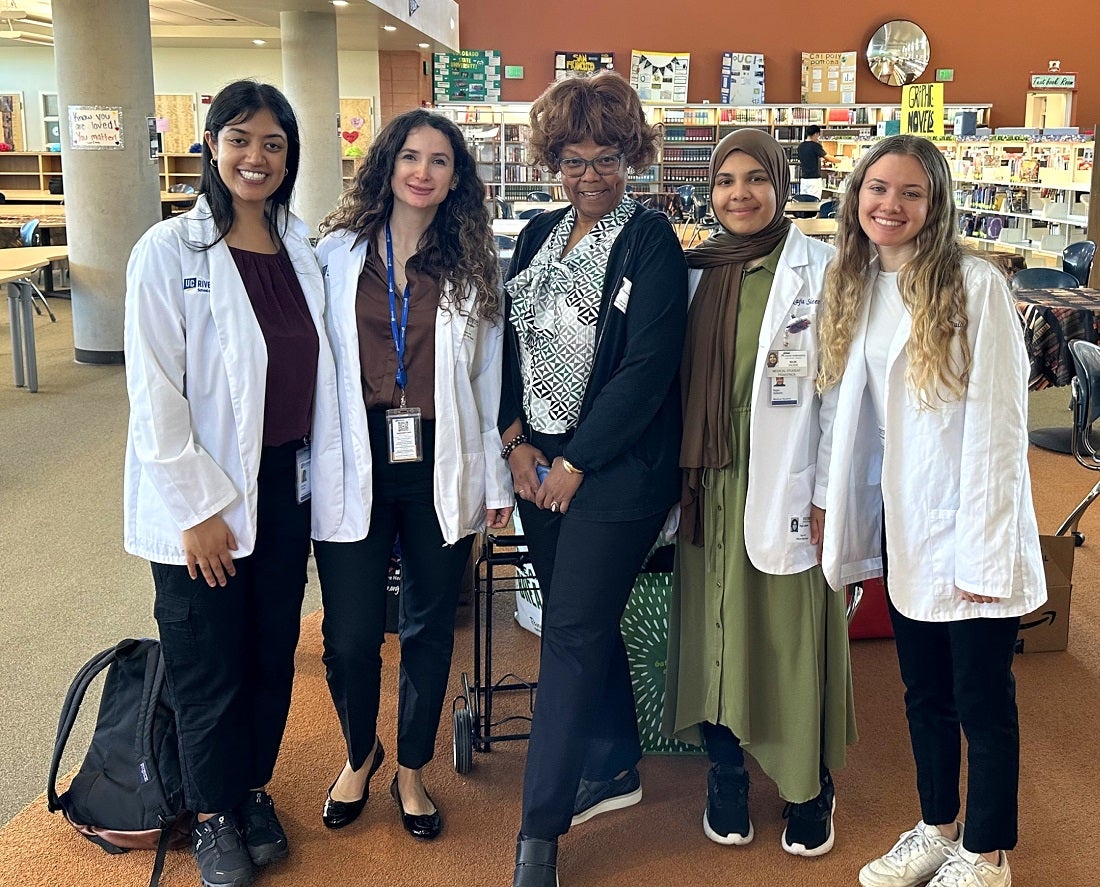
"It really helps also when it comes to things like LACE," Homa explained, referring to the SOM’s Longitudinal Ambulatory Care Experience program in which medical students work with patients in community clinics. "So it's supplementation of what we're already learning in the classroom setting."
For some student leaders, the greatest reward is more personal. "I made it a habit to go back to the high school I graduated from every year," Saleem said. "So every year I get to see my teachers and the siblings of people that I went to high school with. Planning that event is really fun for me."
Building on a legacy
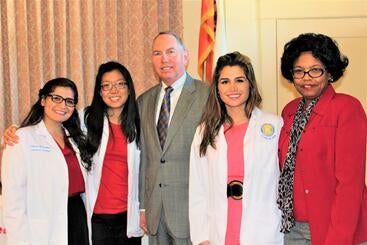
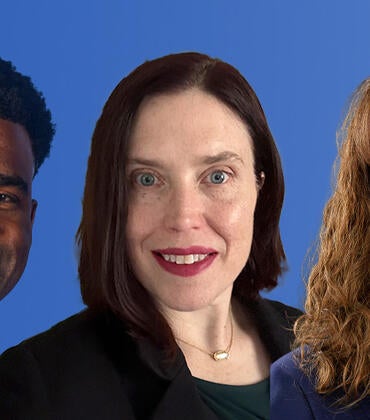
Schulte, MD, and Morvarid Tavassoli, MD, with retired
California Senator Richard Roth and Desiree Reedus, MD, MPH,
at the Doctor's Corner Woman's Community Symposium
at the Riverside Woman's Club.
The most tangible evidence of the group’s impact is its alumni. One of the first students in Doctor’s Corner, Leila Magistrado, MD, is now an obstetrician-gynecologist practicing in Riverside. She also serves as an academic program director. Other past participants, Asha Dasika, MD, and Mayra Hernandez Schulte, MD, are also now doctors themselves and have served in the UCR SOM Family Medicine and pediatric departments (Deema Akari, MD, and Katherine Tsai, MD) and many others.
"She learned those leadership skills in Doctor's Corner early on, and now she's perpetuated those same skills with her own students," Reedus said of Magistrado. "My first interaction with her was in her second month of medical school, and when I saw that she had become the program director, it gave me a sense of pride."
Reedus has always believed that confidence and direction are as important as clinical knowledge. "I have seen them go from people who were not able to really speak their voice or were hesitant, to being leaders involved in all different kinds of organizations," she said. "I'm impressed by the fact that they have learned those leadership skills, and they have the confidence to go out there and be leaders."
As the Doctor's Corner student group transitions its leadership to the incoming second-year class, the organization is poised for expansion. The current leaders hope to establish a women's health symposium at the School of Medicine, host more diverse community events on campus, and continue building relationships with the schools they serve each year.
"We're hoping that our incoming leadership team can establish that and also expand our impact by hosting more events at the School of Medicine with more diverse patient populations," Homa said. "So different age groups, different ethnic backgrounds, cultural backgrounds can come to the School of Medicine and learn about different health topics."
The organization also aims to establish monthly community events, creating consistency that fosters stronger relationships with the schools and community partners it serves. This structured approach, combined with the participation of third and fourth-year medical students who bring clinical experience, will promote continuity and depth.
The work is demanding. Juggling medical school coursework, clinical rotations, and community outreach requires exceptional time management. Yet the leaders of Doctor's Corner speak about it with joy and purpose. "I think things are easier when you have a really big passion for them because you find time to do them, and it's actually a way that prevents burnout," Saleem said.
Reedus, who has guided the organization since its inception, remains optimistic about its future. "My goal is that we can… continue on doing what we're doing and even doing different things, depending on what each student class is interested in," she said. "That's what we're trying to do, build on the legacy."
In the end, Doctor's Corner represents something larger than a community or student organization. It's a model for how medical students can serve their communities while developing into confident, compassionate physicians who understand that staying rooted matters. For Reedus, watching her vision grow and transform over the years has been the greatest reward of all.
"I think the greatest impact of the Doctor's Corner is that it increases confidence, it increases the possibilities of what you can do in a protected type of environment, where you can receive mentorship," she said. "So not only do they do presentations with the community and get more inclined to the community, but they also gain a certain type of confidence and growth."
Pictured at top: 2026 Chino Hills High School: MS1 Tiffany Yang, MS2 Najia Saleem, MS2 Shloka Homa, MS2 Ashlen Bullock, and UCR SOM students MS2 Drake Maestas, and MS2 Leonardo Padilla. Photo courtesy of Desiree K. Reedus, MD, MS.