On Friday, the UC Riverside School of Medicine hosted the inaugural UC Summit on Methamphetamine. The daylong event provided a space for leaders in addiction medicine, faculty from UC campuses, researchers, clinicians, policymakers, and more to come together to address the increasing impact of methamphetamine use across California.
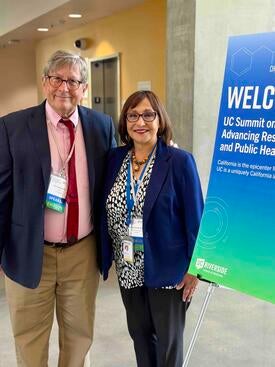
The summit, which drew around 50 attendees in person and on Zoom, was the shared vision of Michelle Bholat, MD, MPH, chair of the Department of Family Medicine at the UCR SOM and UCR Health and Steve Shoptaw, PhD, professor and vice chair of research at UC Los Angeles.
“Here at UCR, we're the right place with the right people to actually make a high impact in the area of methamphetamine,” Bholat said. “We're sharing knowledge and information, and I can feel the excitement in the room.”
“Methamphetamine continues to devastate communities across California and remains deeply connected to the broader overdose crisis in our state,” said Deborah Deas, MD, MPH, the vice chancellor for health sciences and the Mark and Pam Rubin dean of the School of Medicine in her introductory remarks. She stated that California has both the responsibility and the capacity to lead the nation in developing innovative responses to methamphetamine as well as to other stimulant use disorders. “Today’s event represents the beginning of a collective journey to address methamphetamine use through advanced research, policy, and public health efforts,” Deas said.
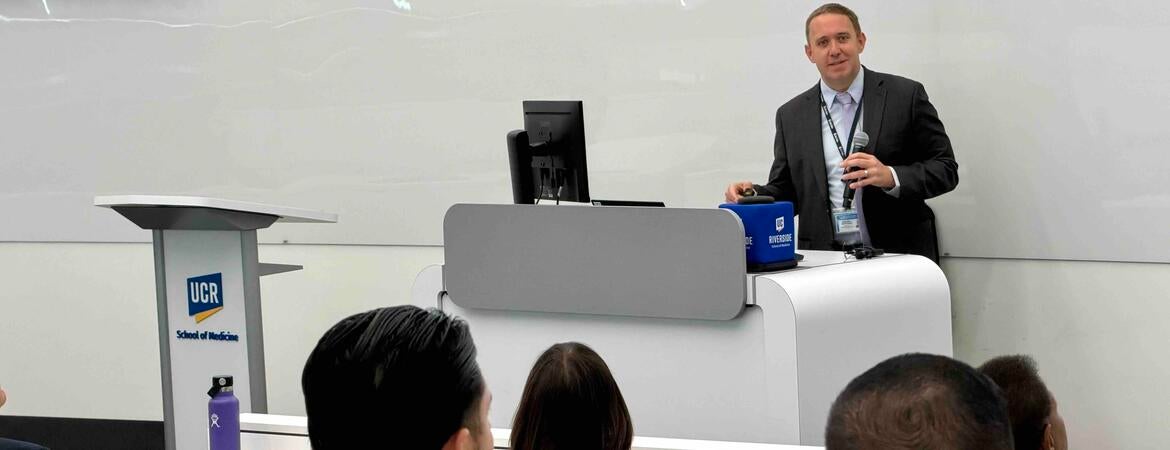
Brian Hurley, MD, medical director of the Bureau of Substance Abuse Prevention and Control for the Los Angeles County Department of Public Health, presented the summit’s keynote address. He shared national data for stimulant use, pointing out that California is disproportionately impacted by methamphetamine use and facing its worst overdose crisis in history.
As an addiction psychiatrist, Hurley emphasized that he’s not a researcher but someone who works to implement solutions. He highlighted that 85% of people impacted by substance use don’t get treatment–and that the majority of them don’t believe they need it. “Why can't people change? One of the biggest issues we have in our health system is that we have this super high barrier, high threshold concept about what it means to be in treatment,” he explained. Hurley then discussed research-based treatments, noting that the most effective is contingency management.
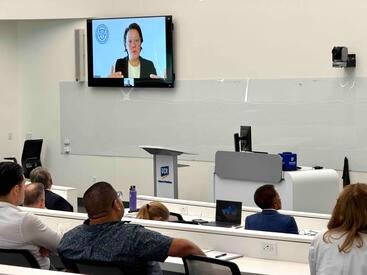
Summit attendee Mario Navarro, a physician assistant at the Riverside street medicine provider Healthcare in Action, said he appreciated Hurley’s address. “That was super fascinating, just to hear or see the data behind contingency management, and that coupled with medications,” Navarro said. He came to the summit to learn about effective approaches and interventions for his work in the field. “I'm going to be heavily involved with addiction medicine treatment, and so just getting the bird's eye view of what my options are was eye opening,” he said.
The summit also included presentations on substance use treatment, research innovations, and policy, with speakers including clinicians and researchers to law enforcement and community partners. During the afternoon session, attendees broke into groups to contribute their expertise to discussing research questions and next steps.
A central goal of the event was to lay the foundation for establishing a UCR center dedicated to methamphetamine research and education.
Despite the stigma surrounding work on methamphetamine, Shoptaw noted that UCR embraced the idea of both the summit and a new research center. “The amount of expertise from the different providers talking about how to get treatment out into communities has been just jaw dropping,” Shoptaw said of the summit. “The idea… is to be able to break down silos, so that people, from wherever they sit, can recognize that methamphetamine is there and then from their position, be able to work preventively on treatments.”
Robert Rodriguez, MD, associate dean of clinical and population health research at the UCR SOM, emphasized the importance of addressing methamphetamine use in California through ongoing initiatives, research, and events like the UC summit. “We need to tackle this problem now with the same urgency as the opioid epidemic,” he said. “UCR is leading the way in addressing public health issues that impact the Inland Empire.”