As federal research funding becomes more competitive, investigators face increasing pressure to present strong preliminary data to secure major extramural grants. However, generating this data often requires significant time, coordination, and financial resources. Without early support, promising ideas may struggle to move past the conceptual stage.
To help bridge this gap, the UC Riverside School of Medicine has offered the Dean’s Collaborative Seed Grant program since 2020. The grants, which this year have an application deadline of April 30, promote cross-departmental partnerships with high potential that otherwise would be unlikely to progress within the confines of a single lab or department and to allow them to secure further funding.
“This program is critical in fostering new impactful research avenues, and especially in helping our faculty to start new collaborations,” said Meera G. Nair, PhD, associate dean for Biomedical Research at the UCR SOM. “With this seed funding, they have the opportunity to test their exciting new ideas and gain traction for external funding opportunities.”
In early January 2025, three interdisciplinary teams at the UCR SOM received a 2025 Dean’s Collaborative Seed Grant, providing each one with up to $25,000 within a 12-month period to support their research. Over the past year, the grants have helped the three teams make significant progress on their projects.
Studying the impact of Salton Sea dust on asthma in local children
Health Sciences Assistant Clinical Professor Esther Caroline McGowan, MD, and Distinguished Professor of Biomedical Sciences David Lo, MD, PhD, received funding for “Distinguishing Asthma-like Pulmonary Disease Induced by LPS Laden Salton Sea Dust in a Pediatric Population,” a project aligned with the School of Medicine’s mission to serve underserved Inland Empire communities.

Their prior laboratory work found that, rather than traditional allergens, dust from the Salton Sea region was triggering lung inflammation in mouse models through lipopolysaccharide (LPS), a bacterial toxin. The seed grant allowed the team to move from bench research into a clinical study, examining whether children newly diagnosed with asthma in the region exhibit a distinct inflammatory pattern.
With the grant funding, the investigators have begun the IRB approval process and coordinated with UCR Health to develop methods for identifying and collecting data from patients interested in participating, hire clinical graduate student researchers, and coordinate with laboratory partners while building the infrastructure needed to conduct pediatric clinical research.
“It’s a long process,” McGowan said, “but the steps we’ve taken in defining what can be done at UCR School of Medicine will go a long way for the next project.” With limited existing structure for interdisciplinary research, the SOM recognized a need to connect departments and labs that might not typically collaborate. The seed grant helped close this gap by providing financial support for collaboration. As some of the first to bridge this gap through the grant, much of the team’s work has involved establishing a path for coordinating future interdisciplinary research.
If the findings confirm a toxin-driven inflammatory process rather than classic allergic asthma, the results could influence how clinicians diagnose and treat children living near the Salton Sea, grounding care decisions in the region’s specific environmental conditions.
Understanding health risks among agricultural workers in the region
Assistant Professor of Biomedical Sciences Erica Heinrich, PhD, and Ann Cheney, PhD, faculty in the Department of Social Medicine, Population, and Public Health and faculty director of the Coachella Valley Free Clinic, received funding for “Impacts of Occupational Exposures on Immune and Pulmonary Health in Farmworker Populations in Inland Southern California,” a project that seeks to understand respiratory and immune health risks among agricultural workers in the Inland Empire.
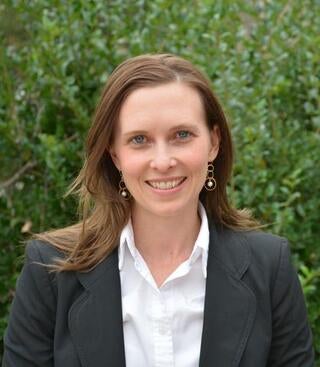
Heinrich’s laboratory focuses on pulmonary and immune biomarkers, while Cheney’s Unidas por Salud community-academic partnership brings years of trust-building within predominantly Spanish-speaking and Indigenous communities in the eastern Coachella Valley. Together, the team is examining how long-term exposure to agricultural dust and pesticides may affect lung function, immune health, and sleep in farmworker populations.
The seed grant allowed the investigators to formally launch the study, which will enroll 80 participants recruited through the Coachella Valley Free Clinic. Over the past year, the team secured IRB approval, trained student volunteers in physiological data collection, and coordinated community-based recruitment efforts. The team then began active data collection in early 2026.
Heinrich emphasized the seed grant’s role in strengthening their competitiveness for larger extramural awards. “In order to obtain larger extramural grants, we needed resources to gather pilot data and demonstrate we can conduct these detailed physiological studies with the agricultural worker community,” she explained.
By combining clinical measures with biomarker analysis, the study aims to better understand how occupational exposures contribute to long-term health outcomes in farmworker communities in the region. Grounded in a close partnership with community health workers and the Coachella Valley Free Clinic, the project engages underrepresented populations in research and generates data that can directly inform local responsive care and future clinical investigations.
Examining the impact of methamphetamine use and HIV in the brain
Across California and the nation, the use of methamphetamine continues to disproportionately overlap with populations affected by HIV. Methamphetamine use also increases the risk of acquiring HIV and is associated with poorer treatment adherence, greater neurocognitive impairment, and higher relapse rates among people living with the virus.
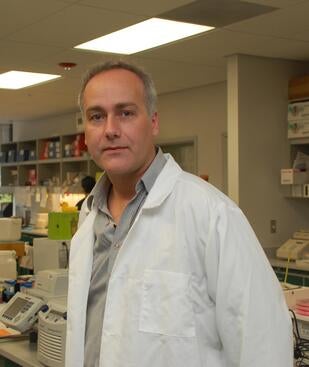
Assistant Professor of Biomedical Sciences Natalie Zlebnik, PhD, and Professor of Biomedical Sciences Marcus Kaul, PhD, with consultation from Professor of Biomedical Sciences Adam Godzik, PhD, received seed grant funding for “Interaction of HIV and Methamphetamine on Anti-Viral and Immune Mechanisms of Dopamine Dysfunction in Addiction,” a project examining how HIV infection and methamphetamine use intersect in the brain.
Both HIV and methamphetamine independently disrupt dopamine signaling, which plays a central role in reward, motivation, and decision making. The team’s research aims to better understand how HIV-related immune changes may increase vulnerability to addiction and relapse.
The seed grant allowed the investigators to build the technical and regulatory foundation required for the study. With the funding, the team secured federal authorization to work with methamphetamine, obtained research-grade drug supplies, and trained graduate students in advanced surgical and dopamine imaging techniques for use in study participants. Having completed these steps, the project has now moved into active data collection. The pilot funding also provided the preliminary data needed to strengthen future NIH submissions.
By combining behavioral neuroscience with molecular and computational analysis, the study seeks to clarify how HIV-related immune mechanisms influence addiction-related brain circuitry and, ultimately, inform strategies to improve outcomes for people living with HIV. In communities like Riverside County with a high and increasing HIV prevalence rate, the research aims to clarify these biological mechanisms to help guide more targeted and effective interventions. In line with the SOM’s mission of improving health in the region, the project’s long-term goal of advancing evidence-based approaches seeks to improve care and outcomes for local and affected communities.