In 2020, Ariel Galindo’s mother broke seven bones in a fall, leaving her bedridden and in pain. Observing her treatments, Galindo noted that her physician wasn't addressing the pain she was experiencing. “I immediately thought to myself, ‘Why doesn't this physician have that training that would make him actually have a better interaction with my mom?’” he recalled. “That’s when I decided, well, if it’s not there, I can bring it to the profession.”
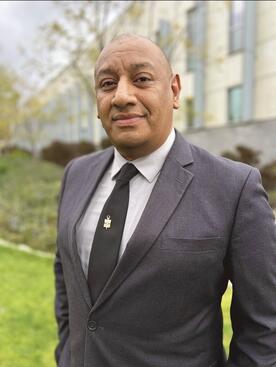
However, the path to becoming a physician felt daunting. He would be starting late as an older, non-traditional student and there were many questions. But he overcame the doubts and enrolled at Chaffey College. With the encouragement of his chemistry professor, he applied to the California Medicine Scholars Program (CMSP), which has serve as a catalyst to turn his aspirations into a reality. Now 44, the Rialto resident is set to graduate from UC Riverside with degrees in psychology and neuroscience in 2028, with medical school on the horizon.
Addressing the region’s physician shortage
CMSP is one of 10 Pathway Programs at the UC Riverside School of Medicine. These programs are designed to prepare high school and college students to apply to and attend medical school by addressing their unique needs through academic and professional enrichment. In keeping with the SOM’s mission to improve health in the region, the programs focus on the Inland Empire, where residents often have to wait months to see a physician as demand for care outpaces the supply of doctors.
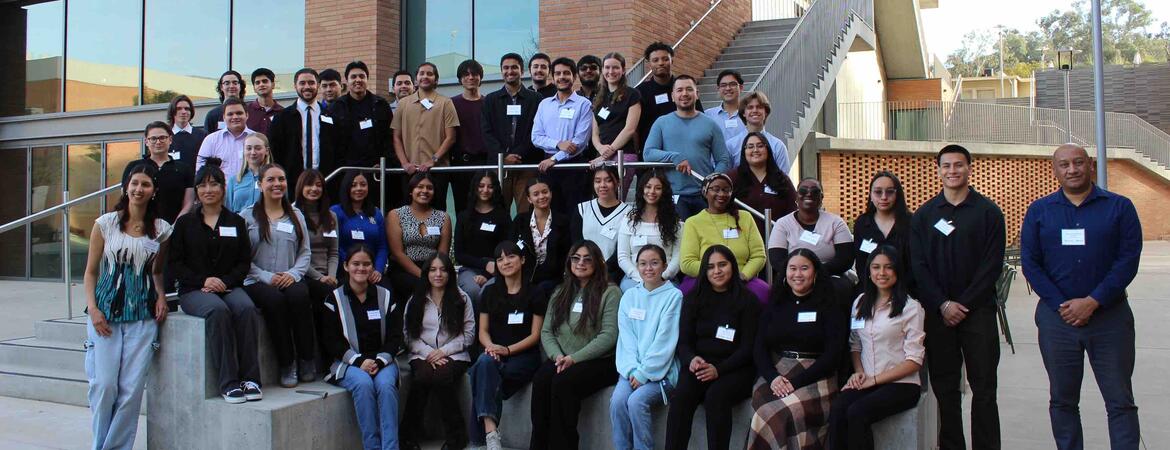
Established in 2022, CMSP is a statewide program dedicated to training homegrown doctors who have deep roots in the community. Using structured educational pathways that start in community college and continue throughout their journey towards a career in healthcare, CMSP supports students by providing advising, mentorship, and professional development opportunities. UCR School of Medicine is one of four regional hubs for the CMSP program, with the others located at UC Davis School of Medicine, UC San Francisco School of Medicine-Fresno, and UC San Diego School of Medicine.
According to Ana Guillen Lopez, CMSP’s program director, “If we have students who live here, who have ties here, who have family here… they’re going to want to stay here and serve as primary care physicians.”
The CMSP also acts as an inclusive gateway designed to diversify the medical profession. “It’s not about excluding people. It’s about bringing people in… so that they can find the path that makes sense for them and that they can pursue that dream of becoming a physician and making it a reality,” Lopez said. Her vision is simple: to diversify the narrative of medicine by bringing in qualified, local community college students who are largely underrepresented in medicine.
To build this pipeline, CMSP at UCR SOM specifically targets nine community college partners in and around the Inland Empire, from Barstow to the Palm Desert. The program supports community college students in applying to either UCR or California State University, San Bernardino and then preparing for medical school. Lopez emphasized that community college campuses are home to immense talent, passion, and drive that has historically been untapped. Many of these students are first generation or come from working-class families, choosing community college for reasons ranging from financial constraints to family responsibilities. However, the lack of visible pathways can lead these high achievers to feel that medical school is a closed door.
“They may feel as though they may not be good enough to pursue medicine as a career because they chose to go to community college,” Lopez said.
CMSP helps dismantle these barriers through academic advising that ensures students have a comprehensive educational plan starting from community college to a four-year university that prepares them for medical school. The program also provides a multi-layered mentorship model, connecting scholars with professional staff, current medical students, and practicing physicians. During this pathway, students have the opportunity to participate in the Pathway Program Future Physician Leaders, where they work on a health education project addressing health inequities in the Inland Empire.
Transferring from Norco College to UCR, CMSP participant Asim Quraishi felt excited about the opportunity to join a cohort of driven, like-minded peers in the program who echoed his passion for community service. Quraishi found that unlike broader pre-med experiences, CMSP focused on the unique journey of each transfer student. “The CMSP really tailors its transfer and it’s detailed for each person,” Quraishi said. “It’s a full, well rounded program that I think caters to different needs.”
Another transformative aspect of the program is access to research opportunities and internships. Compared to larger universities with established research pathways, Lopez said that finding research opportunities as a transfer student can be a challenge. The CMSP bridges this gap through collaborations with UCR faculty.
For Galindo, working at community health fairs during his CMSP internship at UCR’s Center for Healthy Communities was a defining moment in his education. “I was able to interact with people that were actually in need of different services,” Galindo said.
Signs of success: Transfers and transformations
With its first cohort going into their third year with the program after transferring to UCR in 2024, CMSP is fulfilling its mission. “A good number of our students… have been able to successfully transfer from the community college to a four year institution,” Lopez said.
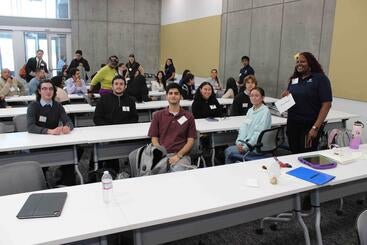
Quraishi highlighted that CMSP’s value lies in the support he received during the transfer process and transition to university life. “It’s more so about the mentorship and what you’re given and the assistance you’re given. I haven’t seen that in other programs,” he said.
Galindo and other CMSP students are already eyeing future opportunities at UCR, such as applying to other Pathway Programs, indicating their integration into UCR’s medical community and preparation for a career in medicine.
For those currently in community college who may feel overwhelmed by the winding road ahead, Galindo said, “I think CMSP actually takes burden away from you and provides you with more resources to actually achieve what you want.”
By investing in local students like Galindo and Quraishi, CMSP is ensuring that the future of healthcare in the Inland Empire is built by the same community it serves. “The big thing there is looking at the students who are from the Inland Empire, who have ties to the Inland Empire, and who ultimately would want to stay here and serve here,” Lopez said.