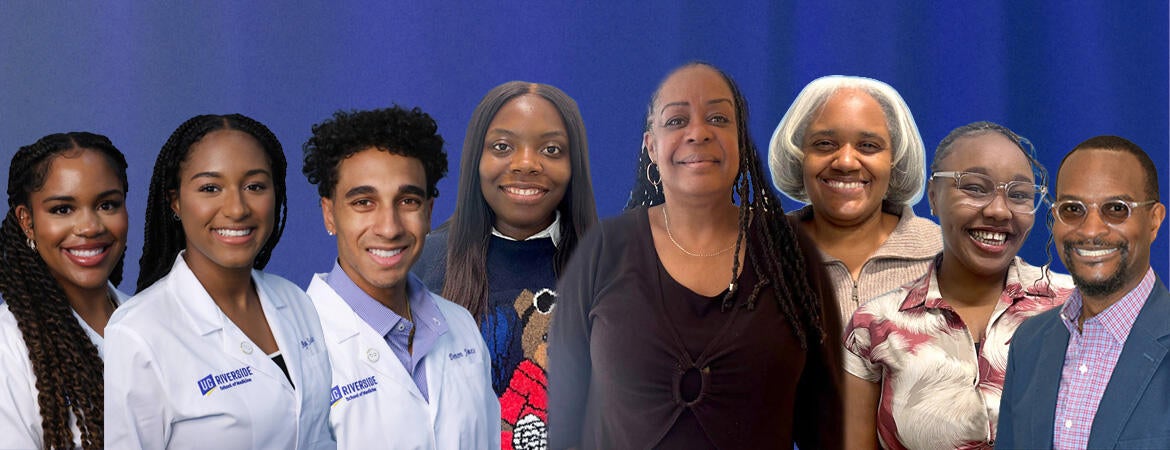
Four decades after its official recognition by the US government in 1976, Black History Month continues to hold importance in communities today, serving as a space for reflection and remembrance. To honor this history, several members of the UCR School of Medicine community shared their perspectives on what this month means to them now in 2026 and how it impacts the concepts of medicine, equity, and the future of healthcare.
What does Black History Month mean to you in 2026, and why does it particularly matter today?
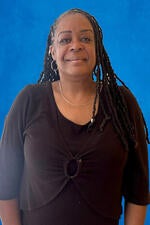
“Black History Month is meaningful to me because it is a time to recognize the contributions, resilience, and leadership of Black individuals – many of whom helped shape our country and our communities, often in the face of significant barriers. It is also a time to reflect on history that hasn’t always been fully taught and to honor stories that deserve continued visibility.”
“Black History Month isn’t only about the past. It’s also about understanding how history connects to the present and influences our work, relationships, and opportunities. As a staff member who supports students from many backgrounds, I see it as a chance to promote learning, respect, and empathy across cultures.”
“I appreciate when students ask questions with curiosity and openness. Black History Month is an opportunity for all of us, regardless of race, to learn from one another, recognize our shared humanity, and continue building inclusive spaces where everyone feels seen and valued.”
Tracy Bereal • Associate Director and Educational Instructor
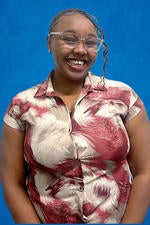
“Black History Month, to me, means really appreciating American culture for Black people. I was not born here. I was born in Kenya, a country in East Africa, and we didn’t really get to know much about what happens in the West… and particularly to Black people.”
“When we moved here, it took a lot of learning to understand the pain that is with my brothers and sisters of the African American community… Every year, I learn a little fun fact about the history of Black Americans, and not only does it help me understand them more and really have a sense of empathy and compassion for what they’ve been through, but it also helps me see how I can be an ally to the community.”
“Black History Month gives me a sense of learning, to see how I can support my community and also support the Black African American community.”
“It is quite crucial today because not only have times changed in terms of what things used to be back in the 1960s… but we have a new layer in our generation today of immigrants who are not familiar with these things. I’ve come to learn that a lot of American society was built off the hard work of Black people… Black History Month has really opened my eyes to these things… it’s helped me embrace that culture that I feel like sometimes tends to be hush-hushed or driven away.”
Grace Nyanzwii • Financial Analyst in the Department of Family Medicine
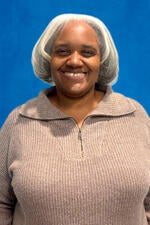
“What Black History Month means to me in 2026 is a little something different than it probably meant when I was younger. It has become a time of shared remembrance within my family. During Black History Month, my cousins have taken extra time to share daily updates… not only from national and international contributions… but also from our own family history.”
“On a more professional level, I am pleased to know how many organizations are still willing to talk about our history. I do think taking a moment to pause and reflect is important. [But it has also] been hard for some people to know if it’s okay to talk about Black history… so when I see people making an effort to talk about this, it is uplifting to me.”
“This year is especially significant. You are interviewing me on a day when I woke up and realized that Jesse Jackson had passed away. In my family… my elders were not allowed to go to college. They had attended segregated schools… But there were people that figured out how to get there, and the fact that they actually knew Jesse Jackson before he was famous, I think it’s just a little special piece of [my] history.”
“So for me, [Black History Month] just means a little extra something this year and this particular day you happen to be interviewing me.”
Teresa Cofield • Director of Pathway Programs
How does this month connect to current important conversations about health equity and access to care?

“The first thing that pops into my mind when I think about that question, especially when it pertains to Black history and health equity and access to care, is the Black maternal health crisis that we’re dealing with. Black women are more likely to die from childbirth than any other race, ethnicity, or any other minority group.”
“And so it’s important to acknowledge the progress that we’ve made, but also acknowledge that there’s still a lot of work to be done. I think this is a conversation that doesn’t need to just start and end in February – it’s a continuous conversation in terms of how we can do better, especially in believing Black mothers with their pain and being advocates for their care.”
“It’s always a good conversation to bring around during February, but definitely year-round.”
Nnennaya Akabogu • Program Coordinator for the Office of Faculty Development

“I think this month speaks to the importance of health disparities among minority groups and the disparities that they face. Since we know that chronic diseases are highly prevalent among minorities… conditions like Alzheimer’s disease, obesity, and heart disease, we have to ask the question, what are we doing about these health disparities?”
“Are researchers focusing on factors that contribute toward health inequities? The kind of research that I do looks more at social drivers of health, so institutional and structural drivers are determinants and should be considered in our proposed solutions. We need to design targeted research, interventions, and policies that mitigate the negative effects of upstream social drivers to attain health equity.”
“Are we appropriately training the next generation of public health practitioners and clinicians who will study and treat medically underserved communities who are at risk for disparities? How are we implementing and translating research findings to our communities? Are their lives being improved, and are they experiencing longevity as a result?”
“We need to look at patient-provider biases in the healthcare setting. Are health outcomes different when Black people are cared for by Black physicians? When Latino patients are cared for by Latino physicians? We know that research reveals that this is the case. But are there enough minority researchers and providers represented in the public health and healthcare settings to ensure that favorable outcomes take place?”
“In 1899, W.E.B. Du Bois studied social determinants of health in Black communities in Philadelphia. After more than a century, we’re still grappling with how to mitigate these social and environmental drivers of health… we’re still behind one century behind trying to achieve health equity.”
Mario Sims, PhD, FAHA • Distinguished Professor of Social Medicine, Population, and Public Health

“Black History Month isn’t just a time to work on these problems our community is facing during February. It’s an ongoing thing for us. Every day we wake up, we’re fighting an unjust system… for Black and brown people… especially in healthcare. As a PRIME scholar … [and] as a future Black doctor, it’s important for me to stay grounded in my commitment to my community and who I am and who I want to serve. I want to have conversations about what race and racism means in both clinical and pre-clinical settings.”
“I want to show up for my community with real education, talking about real things and real outcomes… and highlight that history has affected us in ways that we don’t even consider most of the time.”
“Continuing to name how racism affects both our patients and us as future providers, tap into the community, tap into organizations, to do events, meet people, talk about stuff, just keeping that conversation alive. This month is when the conversation happens to be focused on us, but it’s a year-round responsibility for us.”
Devon Jones • First-year medical student (MS1) and PRIME scholar
How can the UCR SOM and other institutions better support Black students, faculty, and staff year-round?

“Some of the strategies that I was reflecting on are, for one, holding space and encouraging self-preservation. One of the things that I noticed about a lot of Black staff, faculty, and students, is that we would sacrifice and give a lot for our roles because we are genuinely passionate and invested in the communities that we serve. But I fear sometimes that can be taken advantage of. So it's really important to encourage self-preservation so that we can sustain ourselves in this work long term.”
“Another thing that I've reflected on is securing and protecting Black spaces. There's not a lot here at the School of Medicine, and I know that they're actively trying to bring more of that. So, for one, it's securing them and the second part would be protecting them and making sure that we have the resources to maintain those spaces for Black students.”
“Another thing that coincides with that is just sustaining structural support [and] securing funding.”
“There is a lot of emotional labor that comes with navigating racism and academic medicine. Yes, we're resilient but I think it's also important to acknowledge that resilience does not mean the absence of impact. We still deserve to be protected, affirmed, and fully humanized within the institutions we help strengthen.”
Rachel Cage • First-year medical student (MS1) and PRIME scholar

“I think it would be great to see this school incorporate more Black issues into the curriculum, as I feel that health disparities and other health issues that apply to not just the Black community, but other minority communities are not necessarily addressed outside of the prime program, which I'm in. And I think content like that would be very beneficial for other students and faculty. Just to have those issues top of mind when it comes to future health professionals.”
Aya Soler • First-year medical student (MS1) and PRIME scholar
“Black History Month isn’t just a time to work on these problems our community is facing during February. It’s an ongoing thing for us. Every day we wake up, we’re fighting an unjust system… for Black and brown people… especially in healthcare. As a PRIME scholar … [and] as a future Black doctor, it’s important for me to stay grounded in my commitment to my community and who I am and who I want to serve. I want to have conversations about what race and racism means in both clinical and preclinical settings.”
“I want to show up for my community with real education, talking about real things, real outcomes… and highlight that history has affected us in ways that we don’t even consider most of the time.”
“Continuing to name how racism affects both our patients and us as future providers, tap into the community, tap into organizations, to do events, meet people, talk about stuff, just keeping that conversation alive. This month is when the conversation happens to be focused on us but it’s a year-round responsibility for us.”
Devon Jones • First-year medical student (MS1) and PRIME scholar
What progress have you seen, and what work still needs to be done?
“One piece of progress I’ve seen is people sharing their lived experience of what it is to be African American… This really helps us understand that everyone’s story is different, and it debunks the stereotypes. It’s helped me grow my understanding of this community because it's big and broad, and a very significant part of American history.”
“There’s still gaps, not just in healthcare equity… There’s still gaps in education, in recruiting and admitting Black students. There’s gaps in public health. There’s gaps on all levels that need to be addressed.”
“Being a staff member here has really helped me support our students better. Every time I see a Black student, I really go and encourage them… because our community in our region is underserved by Black doctors.”
“Representation does matter. Having a doctor that looks like you provides a different level of care… Black maternal health is a big disadvantaged area, even within healthcare, and our system has made it difficult to bring in minorities and Black Americans specifically.”
“We need to shed light on the issues, but we also need to offer solutions. We talk about the problems, but we don’t always share proactive or practical steps to address these gaps. When one community suffers, we all suffer.”
Grace Nyanzwii • Financial Analyst in the Department of Family Medicine
“So the progress I've seen is there's greater awareness around disparities, and the school seems very comfortable talking about that, which I appreciate. They embrace conversations around disparities and injustice, and embed these topics in the curriculum.”
“There's a recognition of diversity… we’re one of the most diverse schools. We have a Black dean, Black staff and faculty… the director of our PRIME program is a Black woman. This gives us something to aspire towards because in academic medicine, you don't see that often… it gives me a sense of hope”
“I would implore our school to practice ongoing accountability and transparency. Growth requires honesty, acknowledging where we fall short and creating thoughtful, sustainable plans to move forward. Continuous improvement should not be reactive, but embedded into the culture of the institution."
“Invite feedback from Black students… I think it's important that all Black students feel heard and their input is valued in making progress."
“There needs to be more institutional backing for programs that support the success of Black students. We need to move from performative acknowledgment toward measurable investment. There needs to be more tangible outcomes”
Rachel Cage • First-year medical student (MS1) and PRIME scholar
“I've seen a lot of progress in the fact that, like, the Black History Month Lunch and talk, and there was another one for Martin Luther King Day. I've seen a few of these talks and they've been really inspirational, and I really appreciate the school taking time to have those scheduled. But I do think outside of just optional events like this, it should be incorporated into the curriculum and maybe even some of the clinical experiences, as there's very unique health needs in the Black community, especially here in the IE. And it's important to learn how to address those needs and not assume that everybody has the same resources as other patients.”
Aya Soler • First-year medical student (MS1) and PRIME scholar